


Blog
From Safety Testing to Documentation: Building a Drug Master File That Speeds Approval
Published on Dec 2, 2025 Share

Regulatory documentation is often a critical bottleneck on the path from therapeutic discovery to market. Every reagent, buffer, and consumable used in manufacturing must be accounted for, and incomplete records can delay Investigational New Drug (IND) approval. In cell therapy manufacturing, this is especially true for ancillary materials—the reagents and materials that come into contact with patient-derived cells during isolation, activation, and expansion. Although ancillary materials are not part of …
Ancillary Materials in Cell Therapy Manufacturing
Updated on Dec 2, 2025 | Published on Nov 30, 2025 Share

In cell and gene therapy manufacturing, understanding each raw material input is critical to patient safety and therapeutic success. Ancillary materials (AMs) are the reagents, buffers, and biologic process aids used during cell manipulation, purification, and expansion. Although they do not remain in the final product, AM quality directly impacts consistency, safety, and regulatory approval. As manufacturing scales from discovery to commercialization, qualifying these materials appropriately can mean the difference …
Minimize Sample Manipulation to Protect Fragile Cells
Updated on Sep 30, 2025 | Published on Sep 29, 2025 Share

When working with fragile cell types—like stem cells, regulatory T cells, or other rare populations—every extra handling step can make the difference between a healthy, functional sample and one that fails downstream. Processes such as repeated centrifugation, pipetting, or exposure to harsh conditions often introduce unnecessary stress and risk. This article takes a closer look at why minimizing manipulation is so important, the challenges posed by traditional methods, and how …
GMP Cell Therapy Kits Deliver Translation-Readiness
Updated on Sep 30, 2025 | Published on Sep 29, 2025 Share
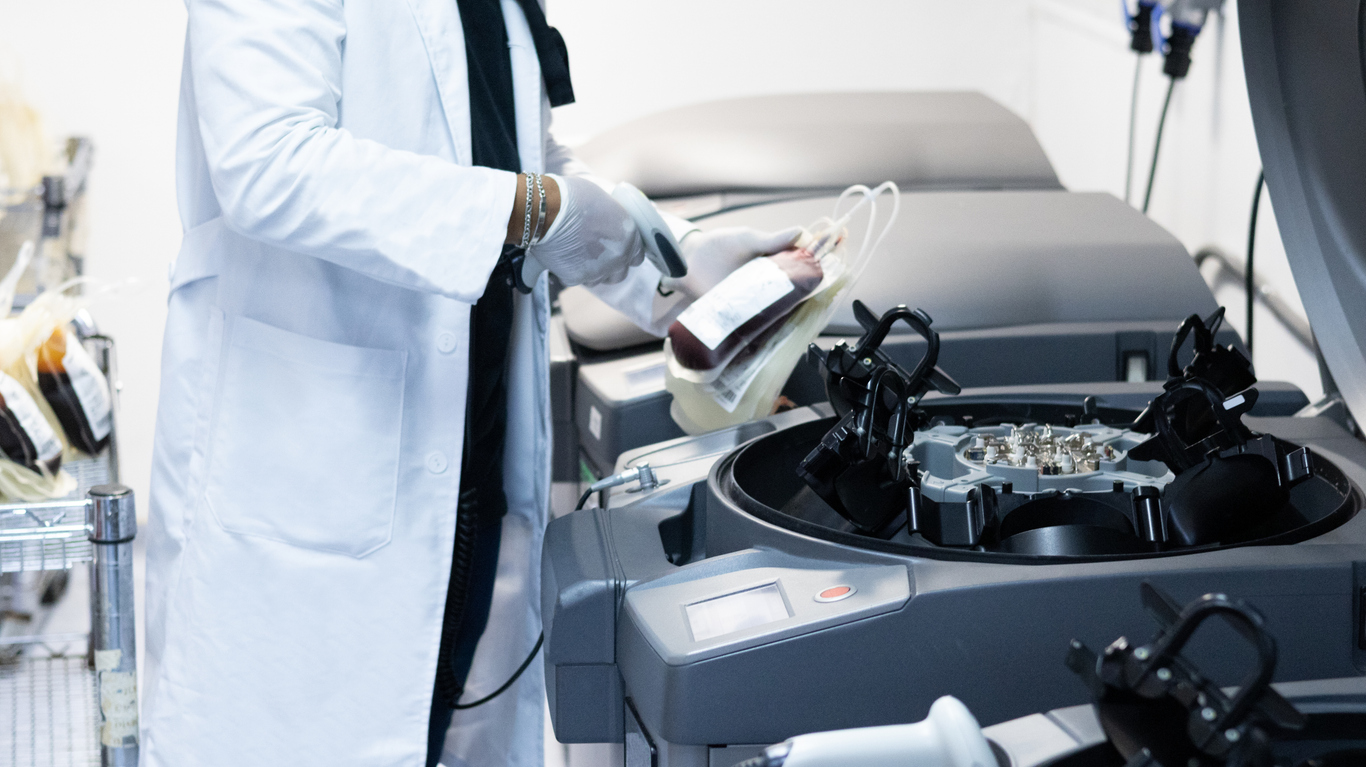
The rapid rise of cell therapies is transforming how we treat disease. However, every step from discovery to clinical application must meet rigorous quality and regulatory standards to deliver safe and effective treatments. One critical piece of the workflow is cell separation: isolating or depleting specific immune cell types with precision, speed, and reliability. But as companies advance toward clinical trials and commercialization, not just any kit will do. So …
Unmatched Flexibility: Manual T Cell Isolation with Akadeum’s Microbubble Kits
Updated on Jul 13, 2025 | Published on Jun 8, 2025 Share
Not every cell therapy lab can access high-throughput automation, but that shouldn’t mean sacrificing quality, consistency, or scalability. For researchers working with limited resources or those who need flexibility within their workflow, Akadeum Life Sciences offers a better way to isolate high-quality T cells. With Akadeum’s microbubble kits, you can achieve high-purity, untouched T cell populations in under an hour without magnets or specialized equipment. The closed-system, in-bag workflow supports …
Streamlining Cell Therapy Workflows: Integrating Microbubbles into the Cocoon® Platform
Updated on Jul 13, 2025 | Published on Jun 5, 2025 Share
Imagine unlocking greater flexibility in your cell therapy workflow while preserving cell health, improving yield, and reducing complexity without overhauling your existing equipment. That’s precisely what Akadeum Life Sciences’ microbubble technology makes possible. In a recent case study with the Lonza Cocoon® Platform, Akadeum’s GMP microbubbles enabled fully automated T cell enrichment from cryopreserved leukopaks—no magnets, beads, or compromise. Microbubble-based separation can modernize cell manufacturing while maintaining compatibility with closed-system, …
The Evolution of CLL Treatment and the Role of CAR T Cell Therapy
Updated on Jul 13, 2025 | Published on Mar 14, 2025 Share
Chronic Lymphocytic Leukemia (CLL) is a complex blood cancer that affects the immune system by disrupting normal blood cell function and production. While traditional treatments such as chemotherapy and targeted small molecule therapies have been widely used, they often fall short for patients with aggressive or relapsed CLL. Chimeric Antigen Receptor (CAR) T cell therapy has emerged as a promising approach, offering the potential for durable remission. However, manufacturing effective …
Transforming Multiple Myeloma Treatment With CAR T Cell Therapy
Updated on Jul 13, 2025 | Published on Mar 5, 2025 Share
Multiple Myeloma (MM) is a cancer of plasma cells that disrupts normal immune function and blood cell production. While traditional treatments such as chemotherapy and immunomodulatory drugs have helped manage the disease, relapse remains a significant challenge. Some recent advances in Chimeric Antigen Receptor (CAR) T cell therapy target the B cell maturation antigen (BCMA) on the cells’ surface. These therapies have shown promising results, offering new hope for patients …
A New Era in DLBCL Treatment
Updated on May 19, 2025 | Published on Feb 12, 2025 Share
Diffuse large B cell lymphoma (DLBCL) is the most common subtype of non-Hodgkin’s lymphoma (NHL), accounting for 30-40% of cases globally. While treatments like chemotherapy, including the R-CHOP regimen, can lead to remission in many patients, relapsed or refractory cases remain challenging, with limited long-term options. CAR T cell therapy transforms the treatment of DLBCL, providing renewed hope to patients by harnessing the body’s immune system to eliminate cancerous cells. …
Overcoming B-ALL With Enhanced CAR T Manufacturing
Updated on Jun 10, 2025 | Published on Feb 10, 2025 Share
B cell acute lymphoblastic leukemia (B-ALL) is an aggressive cancer affecting the bone marrow and blood. When traditional treatments like chemotherapy and radiation fall short in relapsed or refractory cases, CAR T cell therapy provides a transformative new option, offering hope via T cells engineered to target and destroy cancerous B cells. At Akadeum Life Sciences, our innovative cell isolation technologies, including the AlerionTM Microbubble Cell Separation System and our …