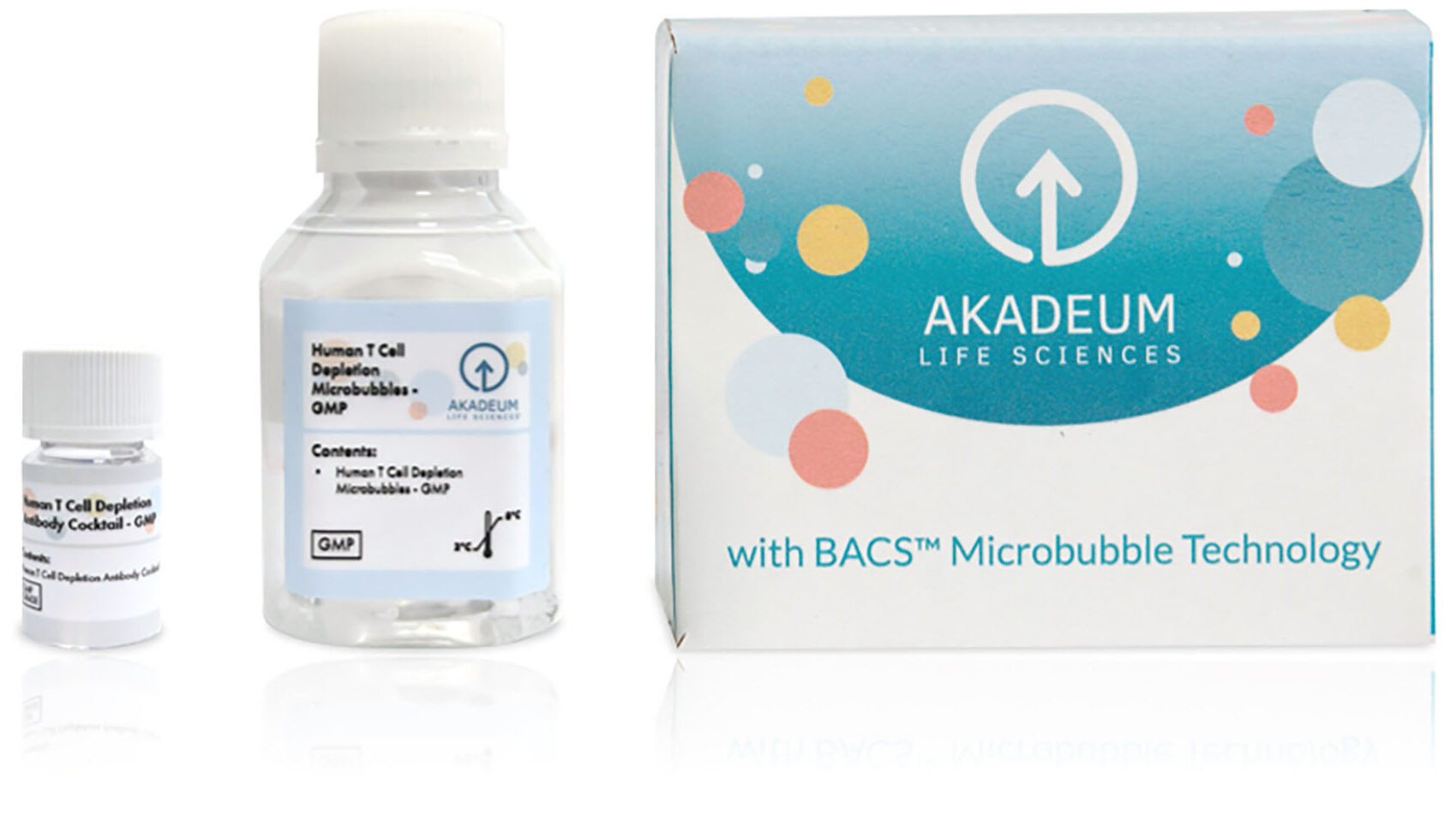
The Human T Cell Depletion Kit – GMP is manufactured under stringent adherence to GMP requirements. In this workflow, Human T Cell Depletion Microbubbles– GMP remove unedited CD3+ T cells from CAR T cultures. Unwanted T cells expressing CD3 are positively isolated using a cocktail of biotinylated anti-CD3 antibodies (GMP), which are then captured using our buoyant Human T Cell Depletion Microbubbles– GMP that gently float the targeted cells to the top of the sample. This leaves a highly pure sample of engineered cells untouched and ready for downstream formulation. The highly scalable nature of this process means that it can easily be incorporated into a wide variety of cell therapy manufacturing workflows.
GMP Compliance per 21 CFR 820, 211, 210 and 11
Sterile, low endotoxin kit components per USP guidelines
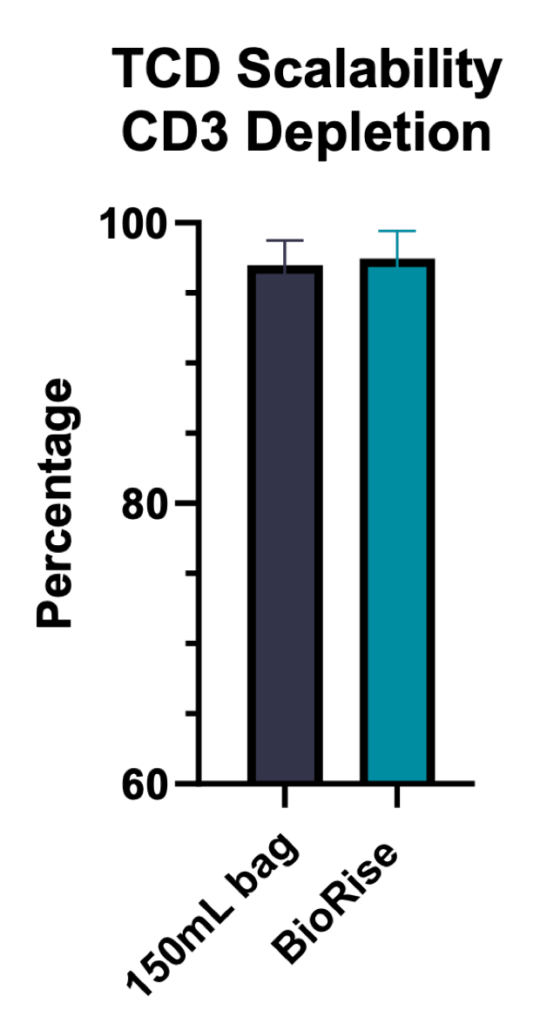
Highly pure CD3 negative cells post-depletion.
Increased recovery of gene-edited cells for downstream formulation.
Gentle process maintains the viability of the cell therapy product.
Clinical ReadyGrade available to support clinical trials through commercialization of your cell therapy pipeline.
Akadeum’s process offers an elegant solution for highly effective and scalable T cell depletion. Biotinylated anti-CD3 antibodies (GMP) bind to untransduced T cells still expressing the CD3 epitope. Streptavidin coated Human T Cell Depletion Microbubbles– GMP then selectively bind to the antibodies labeling the undesired cells. Due to inherent buoyancy, the microbubbles naturally float to the surface of the culture vessel, bringing along CD3+ cells. The bubble-bound cells can then be easily extracted off the surface with the depletion microbubbles– GMP, leaving untouched engineered cells.
Additional Information:
5 Billion cell kit is compatible with manual processing, in-bag workflows, and the Alerion™ Microbubble Cell Separation System
Kit components sterilized by filtration or electron beam irradiation
Storage: 4°C
Cell Type: T Cells
Sample Species and Source: Engineered Human CAR T cell cultures
Cell Separation Method: Positive (Depletion)
Capacity: From 10 x 106 to 5 x 10⁹ T cells
This Kit Comes With:
1 Billion Cell GMP Kit:
10 mLs Human T Cell Depletion Microbubbles – GMP (in storage buffer)
1 mL Human T Cell Depletion Antibody Cocktail – GMP
5 Billion Cell GMP Kit:
50 mLs Human T Cell Depletion Microbubbles – GMP (in storage buffer)
5 mLs Human T Cell Depletion Antibody Cocktail – GMP
Go from research scale to commercialization with microbubbles. Just use more or less to suit your research needs and keep performance maintained.
The Right Products to Support Your Pipeline:
Manufactured in compliance with 21 CFR 820, the Human T Cell Depletion Kit – GMP is ideal for process development and preclinical studies, with a Clinical Ready version available to support later stages of cell therapy pipelines. An RUO version is also available for early research.
Manufacturing by a third party, FDA-registered facility is available, please contact us.
Data
PBMC input material were prepared from washed apheresis cells and additional RBC lysis. Depletion was completed in accordance with the Human T Cell Depletion Kit – GMP protocol; isolations were performed in a BioRise™ Consumable using the Alerion™ Microbubble Cell Separation System. Averaged results from three unique donors comparing BioRise™ depletions to mid scale performed manually in a 150mL bag, respectively (depletion calculated based on remaining T cells in the negative fraction). Input cells for BioRise™ was 5 billion and input cells for 150mL bag was 1 billion. Average starting CD3+ cells was 49%.
Resources
User Guide
Learn how to integrate on your existing equipment:
For processing on the Alerion™, please refer to the:
App Note
Publications & References
Regulatory
As a supplier of ancillary materials for cell and gene therapy, Akadeum recognizes the criticality of confidence in materials and is committed to developing products with appropriate quality efforts.
Our GMP Grade products are tested per USP <85> Endotoxins and USP <71> Sterility prior to release by certified third-party labs. Functional testing includes cell isolation.
GMP standard adherence includes:
21 CFR 820
21 CFR 210
21 CFR 211
21 CFR 11
ISO 11137
Use of USP Class VI plastics in production and bottling
in addition to related ICH standards.
Kit components are sterilized by filtration or electron beam irradiation. Akadeum is compliant with ISO 11137: Sterilization of Health Care Products – Radiation (2024)
We use cookies to ensure that we give you the best experience on our website. By continuing to use this site, you understand that cookies may be used.OkPrivacy policy